What 1,500 First Dates Taught Me About Women
The manifesto. 1,500 first dates across 49 countries, 429 weeks, and what all of it actually taught me. The answer is not what I expected.
April 4, 2026
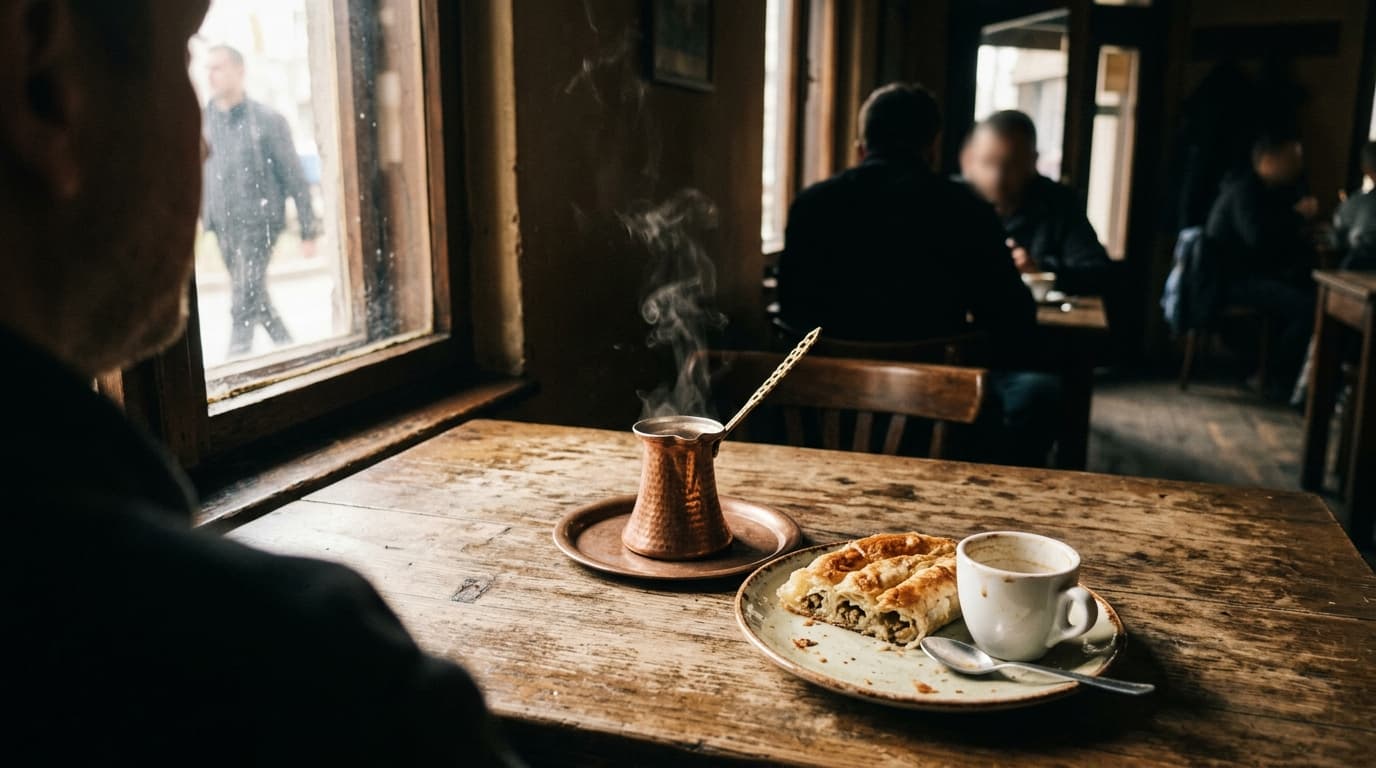
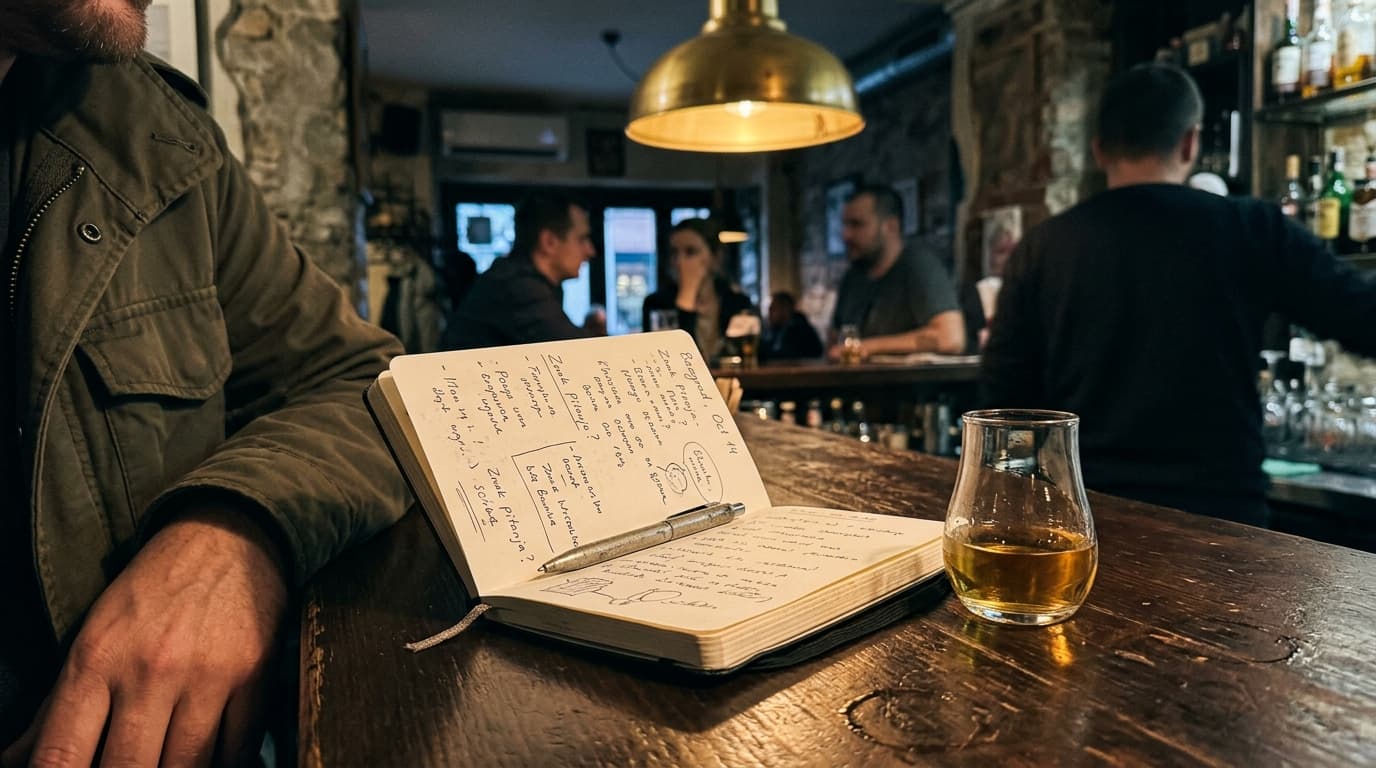
I started counting in Paris, in 2018. A notebook, a pen, a tally mark for every woman I sat across from in a cafe or a bar or a park bench where one of us had brought coffee and the other had brought an excuse to be there. The counting was compulsive from the start. I told myself it was methodology.
By date 200, somewhere in Prague, I had upgraded to a spreadsheet. By 400, in Medellin, the spreadsheet had columns for approach context, conversational hooks, response latency, and a field I labeled "posture shift" that tracked the exact moment a woman's shoulders rotated from square to diagonal. Diagonal meant she was staying.
I filled seventeen Moleskines between 2018 and 2024. Tagged by city. Cross-referenced by outcome. I built frameworks with four-axis grids. I was very thorough.
(I was also very alone, but the throughput was excellent.)
The Numbers, Since You'll Ask
One thousand five hundred first dates. Forty-nine countries. Four hundred and twenty-nine weeks. Roughly five thousand cold approaches, though after the first thousand I stopped counting the ones that ended before they started.
The top ten, by volume: Colombia 141, Brazil 112, Thailand 91, Japan 87, Georgia 77, Hungary 73, Russia 71, Argentina 66, Mexico 63, Turkey 61. Latin America gave me 461 dates. Eastern Europe gave me 414. Asia gave me 346. The remaining 279 scattered across the Middle East, Western Europe, Africa, and two bewildered weeks in New Zealand.
I can give you the numbers for any country. I can tell you the approach-to-date conversion rate in Bogota versus Helsinki. I can tell you that a woman in Tokyo will give you eleven polite minutes before she finds a reason to leave, and that a woman in Buenos Aires will give you four, and those four will be honest.
The numbers are real. They are also the least interesting thing about this.
Cultural Calibration Matrix
What Held Everywhere
Here is what I can tell you after sitting across from women on six continents, in languages I spoke and languages I butchered and a few where we communicated almost entirely through pointing at menu items:
Women test. Everywhere. The test is different (in Tbilisi it arrives in the first ninety seconds; in Stockholm it unfolds across three dates like a pension scheme), but the underlying question is the same. She is trying to find the gap between who you are presenting and who you actually are. She may not articulate it that way. She may not be conscious of doing it. But she is probing for the seam.
I know this because I spent eight years building seams and watching women find them.
The other universal: attention. Real attention, the kind that doesn't glance at the door or formulate its next sentence while she's still finishing hers. I watched this work in Cairo, in Seoul, in a bar in Sao Paulo where the music was so loud we were practically lip-reading. A woman who feels genuinely listened to shifts. Physically. Something in the shoulders drops. It happens in Colombia at minute four. It happens in Japan at minute forty. The timeline is cultural. The shift is human.
And warmth. Some version of warmth that I can't fully define because it changes shape depending on who's generating it. In Latin America it's loud and physical, a hand on your forearm, laughter that fills the room. In Japan it's a sentence she didn't need to say, offered quietly, meant only for you. In Georgia it's a toast at a supra that goes on for two minutes and somehow includes your mother. Different vehicles. Same cargo.
What Was Completely Different Everywhere
Everything else.
The speed. In Colombia, you can meet a woman, have a date, and be in a relationship by Thursday. In Japan, you can have four dates and still not know her last name. I spent 29 weeks in Colombia and generated 141 dates. I spent 17 weeks in Japan and generated 87, and each one required three times the patience.
The rejection. Brazilian women reject you with a smile and a touch on the shoulder that almost makes you grateful. Japanese women reject you by disappearing. Turkish women reject you by introducing you to their cousin. Polish women reject you with a stare so flat it could level a building. Swedish women reject you by being polite and then never existing again.
My notes from Istanbul, October 2020, scrawled on the back of a receipt: "FOUR WOMEN GAVE ME THEIR NUMBER TONIGHT. THREE WERE FAKE. THE FOURTH WAS HER MOTHER'S. I THINK THE MOTHER ONE WAS REAL. UNCLEAR."
The physical escalation. Touching a woman's hand on a second date in Medellin is expected. Touching a woman's hand on a second date in Tokyo can end the entire connection. I learned this in Ebisu, in 2022, at a ramen counter. She stiffened. The remaining forty minutes were two people performing a conversation that had already ended. I spent the train ride home cataloguing exactly what I'd done wrong, which was pointless, because I already knew.
So. The question I kept running into, the one the data forced on me somewhere around date 800: if the rules are different everywhere, what exactly am I an expert in?
The Things I Got Wrong
I got the same things wrong in every country, which should have been a clue.
I calibrated vulnerability. Two confessions per evening, always from the approved list, always delivered with the cadence of spontaneity. I'd been doing this so long that the performance felt indistinguishable from the real thing, to me. It was distinguishable to them. I don't know how. Something in the timing, maybe. Something too clean.
I treated curiosity as extraction. I asked questions the way a journalist gathers quotes: enough to construct a portrait of her, never enough to be changed by the encounter. This worked beautifully for the blog. It was also, I think, a form of control I didn't recognize as control until a psychologist in Krakow pointed it out over whisky in a bar with exposed brick and opinions about ice. She asked what I did with all the information I collected. I gave a polished answer. She waited. The waiting was worse than a follow-up question.
I left every city.
That looks obvious. The project required movement. But I designed the project. A man who stays somewhere long enough will have a second date, a seventh date, a thirtieth date. And by the thirtieth, the questions change. They stop being about her and start being about you, and I had built an entire identity around asking the questions, not answering them.

The Patterns I Didn't Want to See
Around date 1,200, in a city I won't name because the specifics aren't the point, a woman told me I was the most interesting man she'd met in years and also the most absent. She said this calmly, the way you'd observe that it's raining. I asked what she meant. She said I asked excellent questions and listened to the answers like someone taking notes for later.
She was right.
I went back through the Moleskines. This time I was looking for patterns in me.
Three, consistent across all 49 countries:
I peaked in curiosity at the exact moment I sensed she was becoming curious about me, then withdrew. The ratio was managed. I gathered; I did not give.
I generated intimacy without generating risk. Every confession was pre-approved. Every vulnerable moment had been rehearsed in at least four previous countries. The spontaneity was a recording.
I moved. Always. Before anything could calcify into something that required me to be present in a way I hadn't scripted.
(The logistics were the excuse. I don't know what the engine was. Fear is the obvious answer and I'm suspicious of obvious answers, but I don't have a better one.)
What I Still Don't Understand
I don't understand why the women who saw through it stayed for dinner anyway.
I don't understand how a woman in Tbilisi, on our second date, at a khinkali place near the Dry Bridge where the dumplings came out so hot I burned the roof of my mouth, told me that she could feel me "taking measurements" and then ordered another round of wine.
I don't understand the thing that happens in the silence between two people who don't share a language. I sat in a ramen shop in Ebisu in February 2024 with a woman I'd met the night before at an izakaya counter, and for forty-five minutes we ate without talking. She slurped her noodles. I slurped mine. The cook worked. Something by Tatsuro Yamashita played on the radio. Occasionally she pointed at a dish going to another table and raised her eyebrows. I nodded. She nodded. That silence had more in it than most of my 1,500 conversations, and I have no framework for why.
I don't understand why I kept going. The flattering version is intellectual curiosity, a genuine desire to understand human connection across cultures. The unflattering version is that first dates are a controlled environment where I perform well, and I am addicted to performing well. The true version is probably somewhere in the middle, which is unsatisfying, but eight years of data collection hasn't produced a better answer.
Look. I read ninety books on psychology, seduction, culture, attachment theory. Evolutionary psychology, Esther Perel, Robert Greene, bell hooks, Alain de Botton. The books gave me vocabulary. I could describe my own avoidant patterns with clinical precision. I could map them onto a four-quadrant model. I could do this while actively running the pattern in real time, sitting across from a woman in Budapest, deploying the exact combination of curiosity and withdrawal that ninety books had taught me to name and zero books had taught me to stop.
The List
Here is an incomplete list of things I know after 1,500 first dates that I did not know after one:
A Colombian woman laughing does not mean she finds you funny. A Japanese woman's silence is frequently louder than a Brazilian woman's laughter. Georgian hospitality will trick you into thinking you're closer to someone than you are, and you won't realize the distance until you're back in Budapest staring at a WhatsApp message you can't bring yourself to send.
If a woman in Turkey gives you her number and it has one too many digits, that is her mother's number, and her mother will answer, and she will be delighted.
The best date I ever had lasted four hours and contained maybe forty minutes of actual speech.
The worst date I ever had lasted eleven minutes and I was the reason it ended. I said something I thought was charming. It landed in her culture like a grenade. I watched her face close and I knew, in the space between one sentence and the next, that there was no recovering. Eleven minutes. She left money on the table for her tea even though she hadn't touched it.
There is no correlation between how good a first date is and whether there will be a second one. I verified this across all 49 countries. The data is conclusive and useless.
The foreigner premium (the boost you get for being exotic, novel, from somewhere else) has an expiration date, and the expiration date is the exact moment she starts seeing you as a person instead of an experience. In some countries this takes six minutes. In others it takes six weeks. In a few it never happens at all, and those are the loneliest dates, the ones where you can feel yourself being consumed as a novelty and there's nothing on the other side.
Being mixed helps in some places and hurts in others and is invisible in a few. In Colombia nobody could place me and this was an advantage. In Japan the ambiguity made me less threatening than the tall blond Americans, more intriguing than the other Europeans. In Russia it was a problem twice. I don't carry a flag. I carry a face that belongs to no particular country, and the interpretations of that face are the most reliable cultural barometer I have.
Eighteen-year-old me in Paris thought confidence was the answer. Twenty-six-year-old me in Budapest is fairly sure there is no answer, and that the men who claim to have found one are selling something.
Tbilisi, Briefly
I spent 30 weeks in Georgia across four trips. Seventy-seven dates. Tbilisi is the city where I lived through COVID, locked down for six months in an apartment on Agmashenebeli Avenue with a balcony that overlooked a churchyard. I had nothing to do except sit on that balcony and think about why I'd spent two years collecting data on women instead of knowing any of them.
This is the part of the essay where the convention is to describe a transformation. The researcher turns the telescope around. The data reveals the researcher. The real discovery was internal all along.
I'm not going to do that.
What happened in Tbilisi was that I sat on a balcony for six months and then went back to exactly what I was doing before, except in Istanbul. The transformation, if there was one, happened so slowly that I can't point to it. Somewhere between date 800 and date 1,200, the spreadsheet started to bore me. Somewhere between date 1,200 and date 1,500, I stopped filling in the "posture shift" column. I don't remember when. I didn't notice until I went back through the notebooks and found the empty fields.
That's not a revelation. That's erosion.
What the Project Is Now
I'm still dating. Still in cafes. Still sitting across from women whose names I'll remember longer than I should. I'm in Budapest right now, which has been my base since 2018, and last week I had a coffee with a Hungarian woman in a ruin bar in the seventh district and I forgot to take notes. This has been happening more often. I don't know if it means I'm getting better at something or worse at something else.
The site exists because the data is real and some of it is useful. The country guides work. The cultural frameworks hold. If you're going to Medellin or Tokyo or Istanbul and you want to know how dating functions there, I can tell you, and the information will save you weeks of fumbling. That part of the project I stand behind.
The part I'm less sure about is whether any of it added up to the thing I was actually looking for. I've been on 1,500 first dates and I can count the ones I still think about at 3am on two hands. Maybe less. The conversion rate on whatever matters most is very low. I've optimized for the wrong metric.
Anyway. A woman in Belgrade once told me I'd built a telescope and pointed it at 1,200 women and asked when I was going to turn it around. I told her I'd think about it. That was two years ago. I'm still thinking about it.
She covered the check, which I didn't expect. The coffee was Turkish, served in a copper dzezva. The radiator clicked every forty seconds. I was counting.
Find Your Destination
1/8What’s your approach style?
More field notes. No spam. Unsubscribe anytime.
Related reads
The Ruin Bars of District VII: A Date-by-Date Guide
A venue-by-venue walkthrough of Budapest's District VII ruin bars, from Füge Udvar's warm-up at 7pm to Instant-Fogas after midnight. Eight years of rotations.
Why You Shouldn't Split the Bill in Budapest
The Budapest dating bill is a signal channel, not a financial document. The three-date rule, the 163% tipping trap, and why knowledge beats budget every time.
The Supra Rules: Georgian Toasting for Outsiders
The Georgian banquet runs on an office (tamada), a sequence (eight toasts), a horn (kantsi), and a discipline (negative agonism). A foreigner's rulebook.